
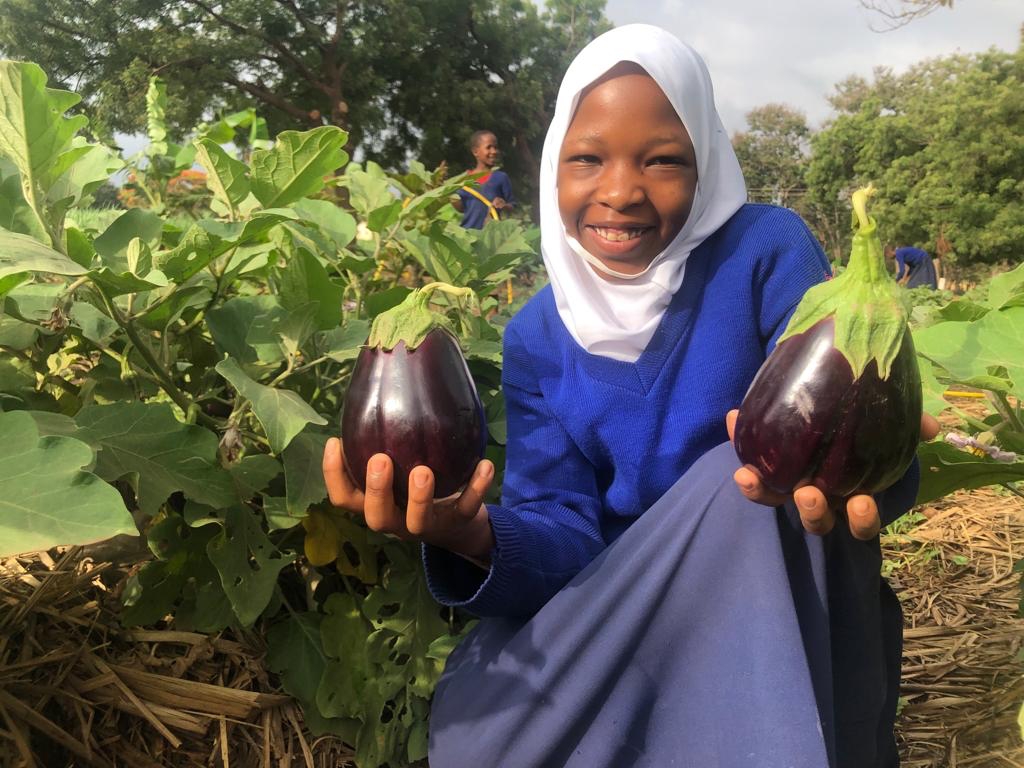
Growing Food, Knowledge and Opportunity
For many children in Lower Moshi, school lunch is often one of the most important reasons for walking several kilometres to school each day. For many pupils, it is the only guaranteed daily meal they will receive.
Yet limited school budgets mean lunches are extremely basic and repetitive: corn porridge for nursery children and makande, a corn-and-brown-bean stew, for older pupils. A lack of dietary variety can contribute to malnutrition and affect children's health, concentration and ability to learn.
Our solution is simple, practical and sustainable: The School Veggie Garden.
A veggie garden can transform both the school lunch and the way children learn about food.

Learning by Doing
Together with our partner FTK, Greenmanjaro provides practical training on creating and maintaining successful veggie gardens in a sustainable, planet-friendly way.
Working with local agricultural and nursery experts, we provide the infrastructure needed to give each garden the best possible chance of success, including: Water pipes and irrigation systems, protective fencing, garden tools, and healthy seeds and seedlings. The fencing is particularly important. Free-roaming goats and other livestock can destroy a thriving veggie garden remarkably quickly, so protecting the crops is essential.
To keep young growers motivated and proud of their achievements, successful student gardeners are recognised with our Green Fingers of the Year award.
No water, no harvest
Many schools in Lower Moshi do not have veggie gardens, and one of the biggest challenges is access to water. Creating a successful school garden can require an entirely new irrigation system and hundreds of metres of piping from the nearest reliable water source.
At the new kindergarten in Miwaleni, for example, we recently constructed a 300-metre water pipe. It now provides easy access to drinking water while also supplying the irrigation needed for the new vertical veggie garden.
Food for Life
Our vegetable gardens form an important practical extension of Greenmanjaro's educational programme.
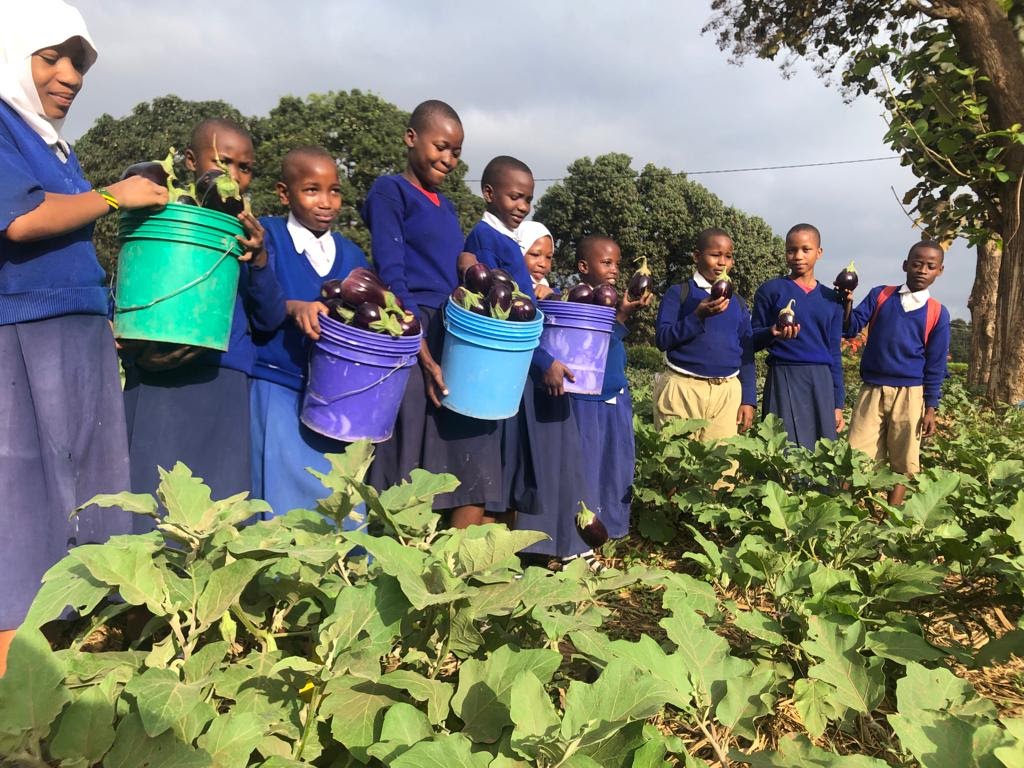
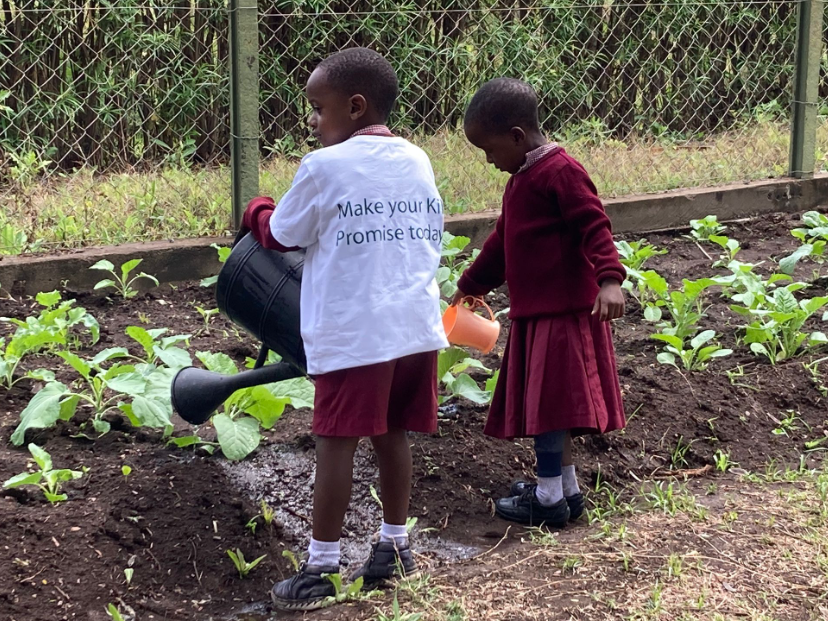
In the Food for Life unit of our student book, The Future is in Our Hands, pupils learn about the importance of a balanced diet and the different roles that protein, carbohydrates and fats play in keeping their bodies healthy. The veggie garden brings those lessons to life. Children plant the seeds, care for the crops, watch them grow and ultimately eat what they have helped produce. In doing so, they discover, in the most practical way, that what we grow and what we eat matter.
Popular vegetables that grow successfully in the region include aubergines, onions, sweet potatoes, potatoes, spinach and garlic.
Why Does a Veggie Garden Cost So Much?
A school vegetable garden may sound simple, but creating one that can survive and flourish requires significant infrastructure.
Water connections, irrigation systems, tools, seeds and seedlings all have a cost. Most importantly, strong fencing is essential to protect the garden from hungry livestock. As a result, establishing a complete, sustainable school veggie garden costs approximately €7,000.
To date, Greenmanjaro has funded 7 vegetable gardens on school grounds.
Our ambition is to help create a productive vegetable garden at every school we can reach, giving more children access to nutritious food while teaching a generation how to grow sustainably.